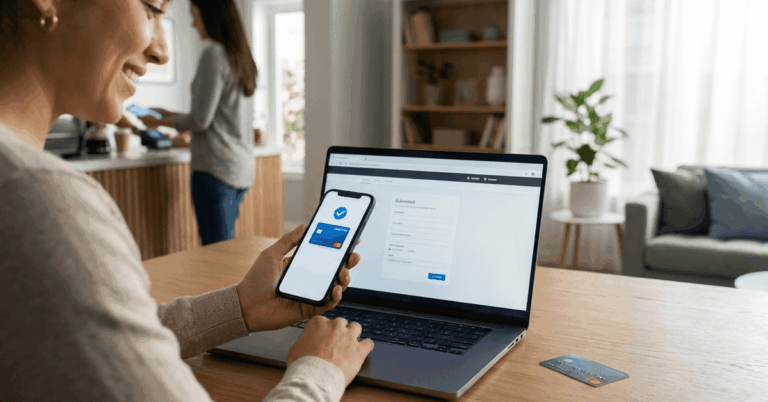
A Capital One Quicksilver application takes about 60 seconds to process. The decision pops up on screen, and for a brief moment, it feels like the hard part is over. The instant approval credit card promise is done, right?
Not quite. That approval still leaves the applicant waiting 7 to 10 business days for a physical card to arrive. Some issuers generate a temporary digital card number. Others don’t. And the gap between “approved” and “usable” is where most of the frustration lives.
This article is for the person applying for a credit card the first time. Maybe a college senior, maybe someone who just moved to the U.S. and needs a card to book a hotel or rent a car. The kind of person who types “instant approval credit card” into Google expecting to walk away with spending power today.
The 60-Second Decision That Still Takes a Week
The phrase “instant approval” describes the speed of the decision, not the speed of access. Every major issuer (Capital One, Chase, American Express, Discover) runs automated underwriting systems that pull an applicant’s credit file and spit out a yes-or-no within a minute.
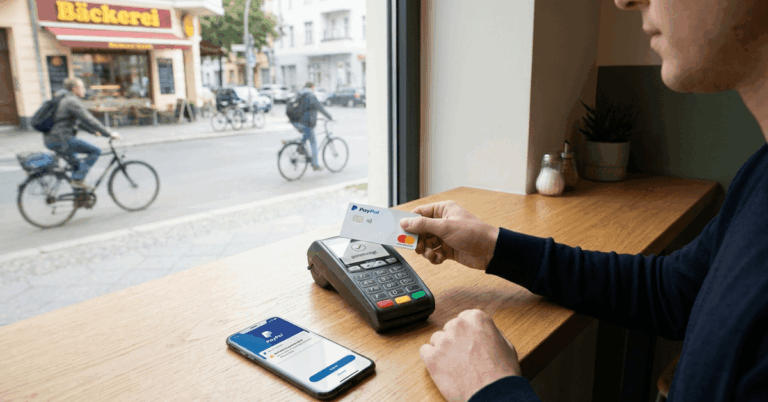
The catch comes after. A physical card ships via standard mail. American Express and Apple Card tend to offer immediate digital card numbers through Apple Wallet or the Amex app.
Chase sometimes provides a virtual number through its app. Capital One does this inconsistently. So “instant approval” could mean same-day spending on one card and a week-long wait on another, depending entirely on the issuer’s digital provisioning setup.
What “Instant” Means at Each Major Issuer
I’d recommend anyone comparison-shopping instant approval cards to focus less on the approval speed (they’re all fast) and more on what happens in the first 24 hours after approval. That post-approval window is the part nobody puts in the comparison table.
American Express cards generally push a virtual card number to the Amex app within minutes of approval. Chase does the same through its mobile app for select cards like the Chase Freedom Flex and Chase Sapphire cards. Capital One’s digital provisioning depends on the specific card product.
If the reason for applying is an emergency purchase or an immediate booking, the issuer’s digital wallet integration matters more than the APR. I’d pick a card from American Express or Chase for same-day use over a card with a slightly better rewards rate that leaves you cardless for a week.
Soft Pulls, Hard Pulls, and the 5-Point Tax
The application process for most instant approval cards follows a two-step pattern. Step one is a soft credit inquiry (also called a soft pull) that checks basic eligibility without affecting the credit score. Step two, triggered once the applicant agrees to proceed, is a hard inquiry that hits the credit report.
According to FICO, a single hard inquiry typically drops a score by fewer than 5 points. That dip lasts about 12 months, though the inquiry itself stays visible on the credit report for two years.
The two-step system creates a strange incentive. Prequalification tools (the soft pull step) exist on almost every issuer’s website now.
They’re marketed as risk-free ways to check eligibility. And they are, technically. But prequalification is not pre-approval, and pre-approval is not guaranteed approval.
The Prequalification Trap
I think prequalification tools do more harm than good for first-time applicants, and my reason is specific: the Capital One prequalification page showed a “pre-approved” result for the Quicksilver card in a test I ran, but the formal application can still be denied after the hard pull.
A prequalification result is based on partial data. The hard pull reveals the full picture. And now the applicant has both a denial on record and a hard inquiry on their credit report, which is the worst possible outcome for someone trying to build credit.
A better approach for a first-time applicant: skip prequalification entirely and apply directly for a secured card that reports to all three bureaus. The approval odds on a secured card are close to 100% because the deposit covers the issuer’s risk. No guessing games, no wasted hard pulls.
Secured Cards for Building Credit: The Fee Math Nobody Does
Secured credit cards are the default recommendation for anyone building or rebuilding credit, and that recommendation is correct. But the specific card matters enormously, and too many guides treat secured cards as interchangeable.
The OpenSky Secured Visa charges a $35 annual fee and requires a deposit starting at $200. It has no rewards program. The card does report to all three credit bureaus (Experian, TransUnion, Equifax), and it requires no credit check for approval, which makes it attractive for people with very damaged credit.
The Capital One Quicksilver Secured Card charges $0 annual fee, requires a deposit starting at $200, and earns 1.5% cash back on all purchases. It also reports to all three bureaus.
Over two years, the OpenSky card costs $70 in annual fees alone, on top of the deposit. The Capital One Secured card costs $0. Both build credit. Both report to the same bureaus. The only reason to pick OpenSky is if the applicant cannot pass even a basic credit check. For everyone else, the free card wins by a wide margin.
| Feature | OpenSky Secured Visa | Capital One Quicksilver Secured |
|---|---|---|
| Annual Fee | $35 | $0 |
| Security Deposit | $200 to $3,000 | $200 minimum |
| Cash Back | None | 1.5% on all purchases |
| Credit Check Required | No | Yes (soft pull for prequalification) |
| Reports to All 3 Bureaus | Yes | Yes |
| Upgrade Path | OpenSky Visa Gold | Automatic review for unsecured card |
The takeaway: a zero-fee secured card that earns cash back is a better credit-building tool than a card that charges $35/year for the same bureau reporting.
APR Ranges and Why They’re Wider Than Expected
The regular APR on most instant approval cards in 2026 falls between 18.49% and 28.49% for applicants with good to fair credit. The Chase Freedom Flex sits at 17.49% to 28.24% variable. The U.S. Bank Shield Visa starts at 16.99% variable.
For applicants with bad credit, the numbers get steeper. The Indigo and Milestone cards aimed at subprime borrowers carry APRs around 35.9%, and their fee structures include annual fees of $49 to $175 in the first year plus monthly maintenance fees starting in year two.
Three things worth checking before accepting any instant approval offer:
- Penalty APR: some cards (like the Blue Cash Everyday from American Express) charge a 29.99% variable penalty APR after a late payment, and that rate can apply indefinitely
- Balance transfer fees: usually 3% to 5% of the transferred amount, even during 0% intro APR periods
- Foreign transaction fees: typically 3% per transaction, which adds up fast for anyone traveling or shopping internationally
The 0% Intro APR Window
Several instant approval cards offer 0% introductory APR periods. The U.S. Bank Shield Visa leads with a 21-month 0% APR on both purchases and balance transfers. The Chase Freedom Flex and Capital One Quicksilver both offer 15-month 0% windows on purchases.
These intro periods can be useful for planned large purchases or debt consolidation. But the 0% rate expires, and any remaining balance immediately starts accruing interest at the regular variable rate.
Missing even one payment during the intro period can trigger a penalty APR on some cards, wiping out the benefit entirely.
Scam Cards and the “Guaranteed Approval” Red Flag
Any card that promises “guaranteed approval” for unsecured credit is lying, a scam, or both. No legitimate unsecured card issuer can guarantee approval without reviewing income and creditworthiness.
The only cards that approach a true guarantee are secured cards, where the deposit eliminates the lender’s risk.
Scam warning signs to watch for:
- Any card that asks for payment to apply (legitimate issuers never charge application fees)
- Cards marketed through unsolicited emails or social media ads with no clear issuer name
- Offers that promise high credit limits regardless of credit history
- Sites that don’t use HTTPS encryption on the application page
The Consumer Financial Protection Bureau maintains a complaint database where applicants can check issuer history. The NFCC (National Foundation for Credit Counseling) offers free guidance for people unsure which card fits their situation.
Questions People Ask About Instant Approval Credit Cards
These are the questions that come up most when people search for fast credit card decisions.
- Q: Can I use an instant approval credit card the same day I’m approved?
It depends on the issuer. American Express and Chase tend to generate digital card numbers through their apps within minutes of approval. Capital One and Discover are less consistent about same-day digital access. The physical card still takes about a week regardless. - Q: Do instant approval credit cards hurt my credit score?
The application triggers a hard inquiry, which typically drops the score by fewer than 5 points according to FICO data. That dip usually recovers within 12 months. Applying for multiple cards in a short window can stack those small hits, though. - Q: Is a secured credit card better than an unsecured instant approval card for building credit?
For someone starting from scratch or rebuilding after missed payments, a secured card is almost always the safer bet. The approval odds are higher, the deposit controls spending limits, and the card reports to credit bureaus the same way an unsecured card does. - Q: What credit score do I need for instant approval?
A FICO score of 670 or higher qualifies for most mainstream instant approval cards. Scores between 580 and 669 may qualify for limited options. Below 580, a secured card that doesn’t require a credit check (like the OpenSky Secured Visa) is the most realistic path. - Q: Are instant approval business credit cards different from personal ones?
The application process is similar, but business cards may require an EIN or business revenue documentation. The American Express Blue Business Plus and Capital One Spark Miles both offer instant decisions for business applicants, though approval depends on both personal and business credit profiles.
Conclusion
The instant approval label sells speed, but smart applicants compare what happens after the approval screen. A card that costs $0 to hold and pays cash back on every swipe beats a “fast” card with hidden fees.
Checking the issuer’s digital wallet integration saves a week of waiting for emergency situations.
Secured cards remain the least dramatic path for anyone building credit from zero. The best instant approval credit card is the one whose fine print survives a second read.