Finding work that fits around personal responsibilities can be challenging. In many parts of the world, app-based delivery platforms provide an alternative for people interested in flexible earning opportunities.
Uber Eats offers delivery opportunities in supported markets, although availability, requirements, payment structures, and working arrangements vary by location. For some people, delivery activity can complement another occupation or fit around studies and family commitments.



This guide explains how Uber Eats delivery work generally operates, what applicants may need, potential earnings factors, and important considerations before getting started.
Understanding Uber Eats: How the Platform Works
Uber Eats connects customers with restaurants and other participating merchants through its digital platform. Couriers collect eligible orders and deliver them to the customer location provided through the app.
Delivery opportunities are available in many markets, but Uber Eats does not operate identically everywhere. Local regulations and platform policies can affect vehicle options, courier classification, onboarding, payments, insurance, and scheduling.
In markets where couriers can decide when to go online, the platform can provide considerable scheduling flexibility. Applicants should confirm the exact working arrangement that applies in their location.
Registration generally begins through Uber’s official delivery platform. Applicants create an account, provide the requested information, upload applicable documents, and complete any required verification steps.
Why Flexible Delivery Work Appeals to Couriers
App-based delivery work differs from many traditional employment arrangements. The potential advantages depend on the individual, market, and contractual model.
Flexible Working Hours
One potential advantage is greater control over when delivery activity takes place.
Where the local operating model permits, couriers can choose periods that fit around other responsibilities. This may be useful for students, people with another occupation, parents, or anyone seeking supplementary earning activity.
However, scheduling arrangements can vary between jurisdictions and should be checked locally.
Accessible Requirements
Many delivery opportunities do not require advanced academic qualifications or extensive professional experience.
Applicants generally need to meet the local eligibility criteria, provide appropriate identification, use a compatible smartphone, and have access to an approved delivery method.
Motorized vehicles may involve additional requirements such as licences, registration, inspections, permits, or insurance.
Different Payment Options
Uber’s payment arrangements vary between markets.
Couriers may receive earnings according to the payout methods and schedules supported in their location. Some markets may provide additional payout options to eligible accounts.
Applicants should check the current local terms instead of assuming that instant transfers or a particular payment schedule are universally available.
Flexible Levels of Participation
Depending on local arrangements, some couriers may use delivery work primarily as supplementary activity, while others may spend more time on the platform.
The suitability of either approach depends on local demand, expenses, earnings, legal classification, and personal circumstances.
Delivery activity should not be considered guaranteed employment or guaranteed income.
Earning Potential and Factors That Affect Pay
Uber Eats does not have one worldwide hourly rate for couriers.
Actual earnings can vary considerably according to location and the specific delivery activity completed.
How Delivery Earnings Work
Depending on the market, delivery earnings may take into account factors such as:
- Completed delivery requests
- Distance travelled
- Time involved
- Local demand
- Local payment calculations
- Eligible promotions
- Customer tips where supported
- Other market-specific factors
Applicants should use current local Uber information when evaluating potential earnings.
Gross earnings should also be considered alongside operating expenses.
Promotions and Incentives
Uber may occasionally make promotions or incentives available to eligible couriers.
These offers can vary according to location, account, time period, and specific eligibility requirements.
A temporary promotion should never be treated as permanent or guaranteed income.
Couriers should rely on the information displayed in their account for any promotion currently available to them.
Local Demand
Delivery activity can vary considerably between cities and neighborhoods.
Large urban areas may have greater restaurant density and customer activity, while suburban or smaller markets may involve different order volumes and delivery distances.
Even within the same city, demand can change according to time, weather, events, restaurant activity, and customer behavior.
Steps to Get Started as an Uber Eats Courier
The exact onboarding process differs internationally, but several general steps are common in supported markets.
1. Check Local Availability
Before preparing documents or purchasing equipment, determine whether Uber Eats currently supports courier registration in your location.
Available transportation methods should also be checked.
2. Review Eligibility Requirements
Requirements depend on the country, city, age rules, vehicle, and applicable legislation.
Applicants may need valid identification, appropriate work authorization, a driving licence, insurance, vehicle documents, or other records.
3. Create an Account
Registration generally starts through Uber’s official delivery platform.
Applicants provide the requested personal information and select an available delivery method.
4. Upload Required Documents
Uber may request identity, vehicle, driving, insurance, or regulatory documents depending on the market.
Applicants should provide accurate and current information.
5. Complete Verification
Identity checks, document verification, screening, or other onboarding procedures may apply.
Processing times vary, so applicants should not assume activation will happen immediately.
6. Use the Uber Driver App
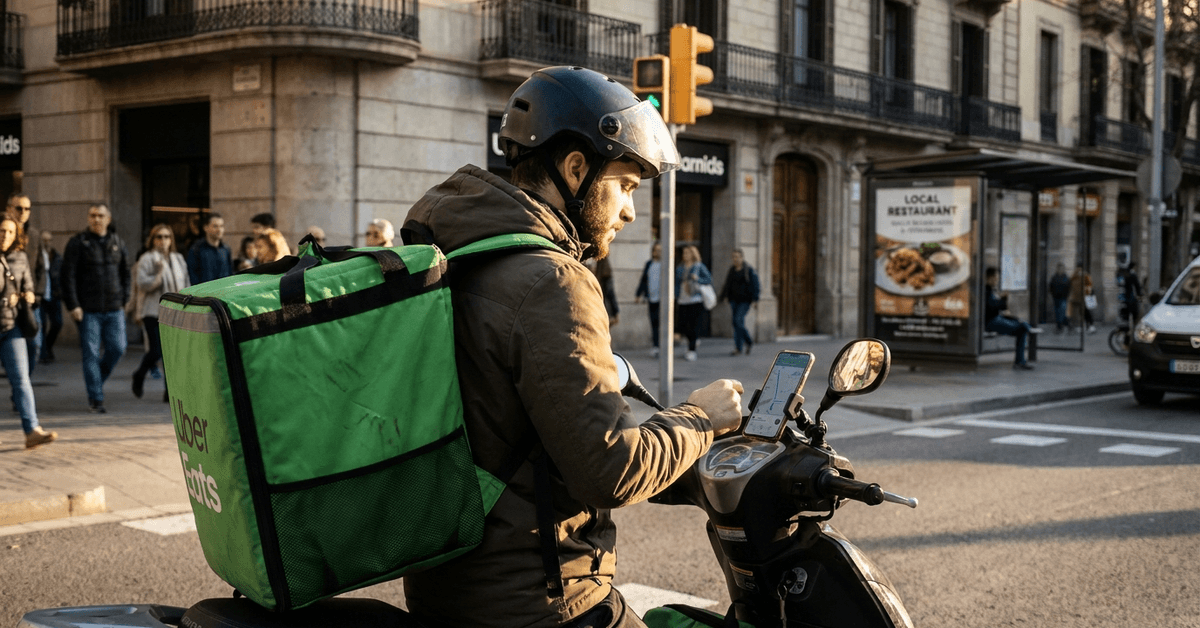
Once eligible and activated, couriers use the Uber Driver app to access delivery-related information.
Available features can include requests, pickup locations, navigation information, account details, and earnings information.
Essential Requirements and Documents
There is no universal Uber Eats courier checklist.
Depending on the market and delivery method, applicants may need:
- Valid government-issued identification
- A compatible smartphone and internet connection
- An approved bicycle, e-bike, scooter, motorcycle, car, or other delivery method
- A valid driving licence where required
- Vehicle registration where applicable
- Appropriate insurance when required
- Work authorization where applicable
- Tax or business information required locally
- Other documents requested during onboarding
Applicants should always follow the requirements provided for their own location.
Typical Tasks and Responsibilities
The fundamental delivery process is relatively straightforward.
Couriers receive eligible delivery requests through the app, travel to the designated merchant or restaurant, collect the order, and transport it to the delivery location.
Couriers should follow pickup and delivery instructions and handle orders appropriately.
Communication with customers or merchants may occasionally be necessary.
Waiting times, traffic, parking, weather, and restaurant preparation can affect the amount of time required to complete a delivery.
Working Hours and Flexibility
Flexible scheduling is an important attraction of app-based delivery in many markets.
Where the local model allows, couriers may choose when to go online and when to stop accepting requests.
However, available orders are not guaranteed simply because a courier is online.
Demand can vary according to location and time.
Anyone considering delivery activity as a major source of income should understand this variability and compare expected earnings with personal financial needs.
Choosing a Delivery Method
Available transportation options depend on the market.
Bicycle
Bicycle delivery can be practical in dense urban areas and eliminates fuel expenses.
However, bicycle couriers should consider physical effort, maintenance, weather exposure, road conditions, and appropriate safety equipment.
Scooter or Motorcycle
Motorized two-wheel vehicles can provide greater range and may be useful in areas with longer delivery distances.
Expenses can include fuel, insurance, maintenance, registration, licensing, and protective equipment.
Local commercial-delivery rules should be reviewed carefully.
Car
Cars provide weather protection and may work well in suburban or geographically dispersed delivery zones.
Operating costs can be significantly higher.
Fuel or charging, maintenance, parking, insurance, depreciation, and registration expenses can all reduce net earnings.
Legal and Tax Considerations
The legal classification of delivery couriers differs around the world.
Depending on local laws and the operating arrangement, couriers may be treated differently under employment, contractor, self-employment, tax, insurance, and social-security regulations.
Requirements from one country should not be applied automatically to another.
Some couriers may need to report earnings, register with tax authorities, maintain business records, obtain insurance, or satisfy other regulatory requirements.
Applicants should consult official local government information when determining their obligations.
Insurance Considerations
Insurance is particularly important for motorized delivery activity.
Ordinary personal vehicle insurance may not automatically cover commercial food delivery.
Couriers using cars, motorcycles, or scooters should check Uber’s requirements, their insurer’s terms, and local legislation.
Appropriate coverage can help reduce significant financial and legal risks.
Benefits and Challenges to Consider
Uber Eats delivery can provide useful flexibility, but applicants should consider both sides before registering.
Potential Benefits
- Flexible scheduling where locally supported
- App-based workflow
- Different transportation methods in eligible markets
- Potential supplementary earning activity
- Ability to become familiar with local areas
- These advantages depend on the local operating model and individual circumstances.
- Potential Challenges
- Earnings can fluctuate
- Order availability is not guaranteed
- Vehicle and equipment expenses may be the courier’s responsibility
- Weather and traffic can affect deliveries
- Taxes and insurance may create additional costs
- Traditional employee benefits may not apply under some arrangements
Understanding these factors can help applicants develop more realistic expectations.
Understanding Busy Delivery Periods
Food-delivery demand often changes throughout the day.
Lunch and dinner periods may generate greater customer activity in many locations, while weekends, events, weather, and holidays can also influence demand.
These patterns do not guarantee higher earnings.
Couriers can gradually learn how their own market behaves and determine which periods best fit their schedule.
Tips for Managing Delivery Work
Careful planning can make delivery activity easier to manage.
Couriers can learn local routes, understand traffic patterns, maintain their vehicle or bicycle, and keep appropriate equipment in good condition.
Tracking earnings and operating expenses is also important.
Fuel, charging, maintenance, insurance, mobile data, parking, equipment, and taxes can substantially affect take-home income.
Safety should always take priority over completing additional deliveries.
Comparing Uber Eats With Other Delivery Platforms
Different delivery platforms operate in different international markets.
Rather than naming one set of competitors worldwide, applicants should identify which services actually operate in their location.
They can then compare eligibility requirements, payment structures, vehicle options, contractual arrangements, operating costs, and local availability.
Using more than one platform may also be restricted or affected by contractual or local rules, so applicants should review applicable terms before doing so.
Is Flexible Delivery With Uber Eats Worth Considering?
There is no single answer for every courier.
Uber Eats may suit people who value flexible scheduling, independent activity, and an app-based workflow.
Others may prefer traditional employment with fixed hours, predictable wages, and established employee benefits.
The decision should consider local demand, expected expenses, legal requirements, transportation options, and the individual’s need for income stability.
Your Next Move: Explore Delivery Opportunities
The most reliable way to explore Uber Eats delivery opportunities is through Uber’s official platform.
Applicants can check whether courier registration is supported in their market, review current requirements, and learn which delivery methods are available.
Avoid third-party services that promise guaranteed earnings, guaranteed activation, or unofficial shortcuts around Uber’s onboarding process.
EXPLORE UBER EATS DELIVERY OPPORTUNITIES →
Use Uber’s official delivery platform to review current availability and requirements for your location.
Final Considerations
Uber Eats delivery work can provide a flexible earning option in supported markets, but conditions differ considerably around the world. Availability, scheduling, payments, vehicles, taxes, insurance, and worker classification all depend on local circumstances.
Potential earnings are not guaranteed, and gross earnings should always be considered alongside operating expenses. Understanding local demand and costs can provide a more realistic picture of the opportunity.
Applicants should verify legal, tax, insurance, and eligibility requirements through official sources relevant to their jurisdiction. Requirements taken from another country may not apply locally.
For people comfortable with flexible and app-based delivery activity, Uber Eats may be an option worth exploring. Checking the official platform first is the best way to understand what opportunities and requirements currently apply in your market.