Managing credit wisely often starts with understanding the basics—and for many Czechs, a Česká spořitelna credit account is a familiar financial tool. But what truly makes these accounts appealing is the interest-free period they offer.
This guide unpacks what these periods mean, who they benefit, and how everyday users can make more informed decisions about using credit cards from Česká spořitelna.
If you’re trying to demystify those complex terms or simply want to reduce your borrowing costs, perhaps you’ll find something useful here.
What Are Česká spořitelna Credit Accounts?
Česká spořitelna’s credit accounts work like most standard credit cards. Account holders get access to a predetermined credit limit and spend on everyday expenses, online shopping, or even bill payments.
Monthly statements summarize your spending, minimum required payments, and—crucially—the duration of the interest-free period. Not everyone realizes how much this can impact their repayment strategy, but it deserves close attention.
Interest-Free Periods: The Fundamentals
An interest-free period is a timeframe during which you can repay what you’ve spent without owing any interest.
Česká spořitelna offers these periods to attract new users and reward prompt repayment. However, the mechanics, qualifying criteria, and potential risks aren’t exactly straightforward. Some may find the concept a little confusing at first.

How Long Is the Interest-Free Period?
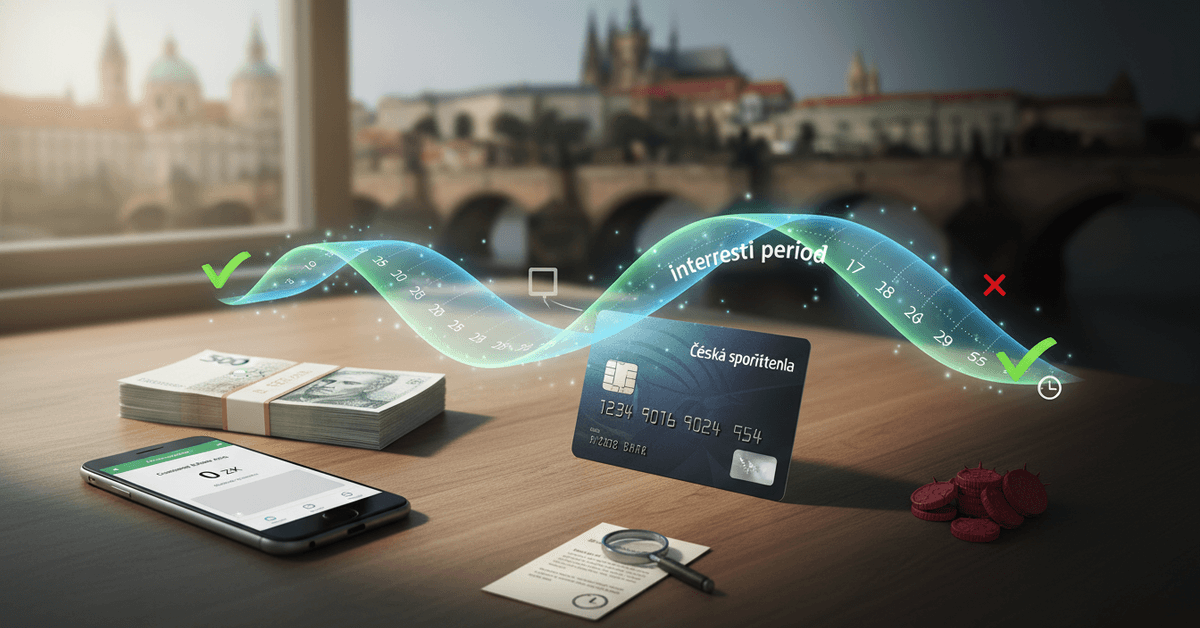
Most Česká spořitelna credit cards feature an interest-free period up to 55 days. This window can vary by product or promotional offer, so it’s worth checking the exact terms for your card.
Those extra days can make a notable difference, especially if you coordinate your purchases with payment cycles.
When Does It Start?
The period usually starts on the date a purchase is recorded and ends on the statement’s payment due date.
Timing, therefore, grows pretty important. It’s not always intuitive, and figuring out the optimal timing for expenses might take a while to master.
Eligible Transactions
While standard purchases qualify for the interest-free period, cash withdrawals or transfers do not—they often begin incurring interest immediately. Overlooking this detail is surprisingly common and sometimes leads to unwanted expenses.
Why Interest-Free Periods Matter for Borrowers
Using a credit card’s interest-free period well can save you considerable money over time. Not only does this help you avoid interest charges, but it can also aid in budgeting and managing cash flow.
Anyone who occasionally finds themselves waiting for their next paycheck probably understands the benefit.
Avoiding Interest with Timely Payments
If you pay off your statement in full before the due date, you won’t accrue any interest on qualifying transactions.
This is the core advantage—though admittedly, many users sometimes underestimate how easy it is to miss the cut-off.
What Happens If You Miss the Payment?
Failing to clear the full balance on time generally means interest applies retroactively from the purchase date. Suddenly, that interest-free window disappears, making small lapses feel more expensive than expected.
Comparing Česká spořitelna with Other Czech Banks
While Česká spořitelna has a robust offer, it’s not the only choice in the Czech credit landscape. Competitors like ČSOB and Raiffeisenbank also provide credit cards with their own versions of interest-free periods. Here’s a quick comparative table:
| Bank | Max Interest-Free Period | Minimum Payment |
|---|---|---|
| Česká spořitelna | up to 55 days | 5% (min. 300 CZK) |
| ČSOB | up to 55 days | 5% (min. varies) |
| Raiffeisenbank | up to 50 days | 3% (min. 300 CZK) |
A glance at the table reveals most big players follow a similar model, though subtle differences in minimum payments or fees can appear significant for certain profiles.
Tips for Making the Most of Interest-Free Periods
To get the full benefit of an interest-free period, paying close attention to timing and payment practices is essential. Here are practical, experience-driven tips drawn from everyday use:
- Schedule larger purchases soon after your billing cycle starts—this maximizes your no-interest days.
- Set automatic reminders for payment due dates. It’s surprisingly easy to forget, even for the financially organized.
- If you use your card abroad, check if purchases still qualify for the interest-free period. Sometimes small print hides exclusions.
- Avoid mixing cash advances and regular purchases on the same statement—they incur different interest rules and can muddy the waters.
- Read the latest official Česká spořitelna terms when your card is renewed, just in case of rule changes.
Potential Drawbacks or Ambiguities
It’s not all positive. Some cardholders find the structure of interest-free periods a bit complicated. There can be hesitation for those who aren’t comfortable monitoring their statements closely each month.
Plus, the risk of paying late—even unintentionally—is ever present. For those who worry about impulse spending, the ‘free’ feeling might actually tempt overspending.
If you rely on cash withdrawals, these cards become less attractive due to the immediate accrual of interest. Somewhat oddly, many still use the cards for ATM transactions despite the warnings.
Legal, Regulatory, and Tax Considerations
Credit cards in the Czech Republic—including those issued by Česká spořitelna—must comply with domestic and EU banking regulations.
Cardholder rights are well protected, but the responsibility to use accounts appropriately still rests largely with individuals.
Tax reporting typically doesn’t affect standard credit card use, though business users should always consult a financial advisor. Perhaps more people would avoid misunderstandings if they did so.
Who Benefits Most from Česká spořitelna’s Interest-Free Periods?
These periods suit users who are disciplined with payments and want a short-term liquidity buffer without paying extra interest.
Students, frequent travelers, or working professionals looking to manage cash flow might all appreciate this flexibility. But for those apt to carry balances, the advantage can vanish quickly.
FAQs About Česká spořitelna Credit Accounts and Interest-Free Periods
- Q: Can I extend my interest-free period?
A: No, the length is set by the bank’s product policy. But optimizing your purchase date can give the longest possible window. - Q: What if I only pay the minimum?
A: Interest will apply on the unpaid portion, so the remaining balance loses its interest-free status. - Q: Are foreign currency purchases included?
A: Generally, yes—though it’s wise to check your specific card’s terms for rare exceptions.
Conclusion
Learning to use a Česká spořitelna credit account efficiently hinges on understanding interest-free periods. Those who plan their spending and clear balances on time generally save the most—though it takes a bit of organization.
Not everyone will find the process seamless, but the payoff is there for the prudent. There are nuances, and the fine print sometimes matters more than expected.
If you’re weighing the benefits, perhaps reviewing your own payment patterns is a good starting point.