The Czech maintenance sector is crucial for maintaining public health, workplace efficiency, and a positive environment.
Yet, there’s often some confusion about what falls under professional cleaning standards and what the specific duties entail.
This article explores everything from required tasks to accepted benchmarks, tailored for facility managers, property owners, and anyone curious about the industry in the Czech Republic.
The goal? To offer a realistic, trustworthy resource on cleaning practices, expectations, and legal nuances—while highlighting how high-quality maintenance drives workplace satisfaction.
Overview: Importance of Professional Cleaning in the Czech Republic
In recent years, demand for professional cleaning services has risen markedly due to stricter hygiene standards in workplaces, public venues, and residential spaces.
Although motivations may vary—a regulatory shift here, or simply a public health concern there—the need remains consistent.
Facilities that consistently meet (and document) suitable cleaning standards often see improved reputation and increased occupant well-being.
That’s something you notice when walking into a meticulously maintained office vs. one that’s… less cared-for, perhaps.
What Defines “Professional Cleaning Standards”?
In the Czech context, professional cleaning standards refer to sets of guidelines that shape procedures, materials, frequency, and assessment of cleanliness.
These benchmarks are set by a mix of local legislation, EU directives, and the practices adopted by reputable cleaning firms.
Some companies follow their own protocols, occasionally even exceeding minimum legal requirements for competitive reasons.
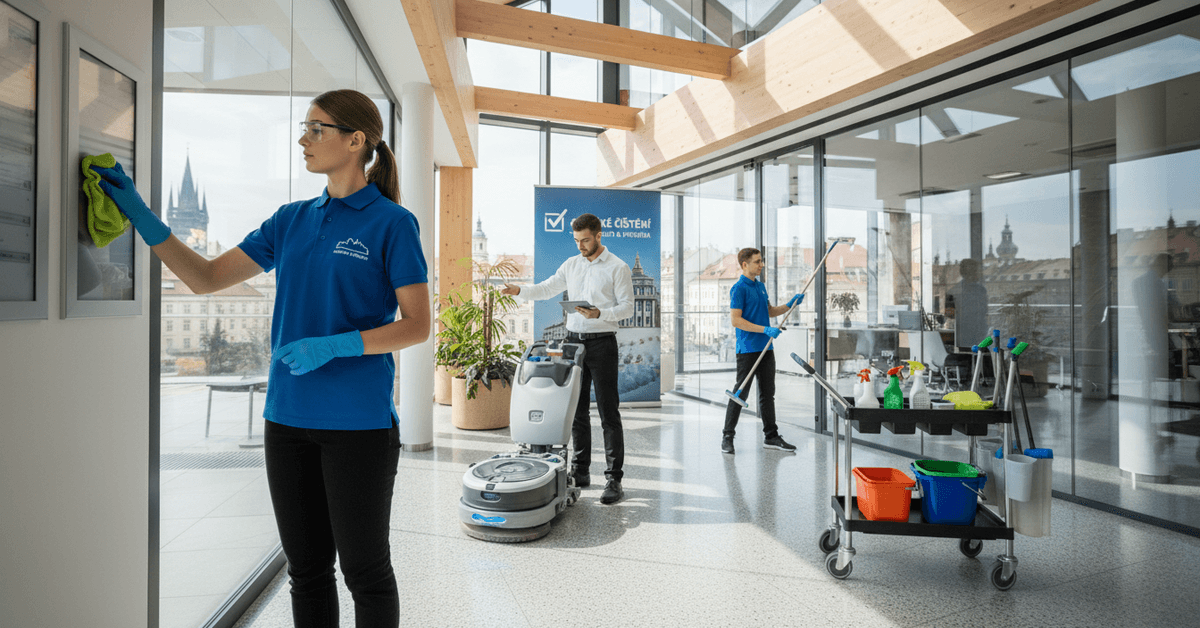
Core Principles
- Using certified detergents with proven effectiveness
- Regularly updating procedures based on current health regulations
- Ensuring personal protective equipment (PPE) for staff
- Maintaining detailed logs of cleaning activities for audits or inspections
One well-regarded source for Czech standards is the Association of Facility Management Czech Republic (IFMA CZ).
While not every provider is an IFMA CZ member, many align their practices for credibility and compliance reasons. For further detail, their official website offers useful resources.
Common Cleaning Areas
- Office spaces (workstations, meeting rooms)
- Sanitary facilities (bathrooms, kitchens)
- Corridors and shared zones
- Entrances, lobbies, and waiting areas
- Windows and glass partitions
It’s easy to underestimate the effort required for consistent cleanliness, especially in high-traffic or specialized environments.
Frankly, even some professional cleaning companies sometimes miss those hard-to-reach corners or forget less “visible” tasks.
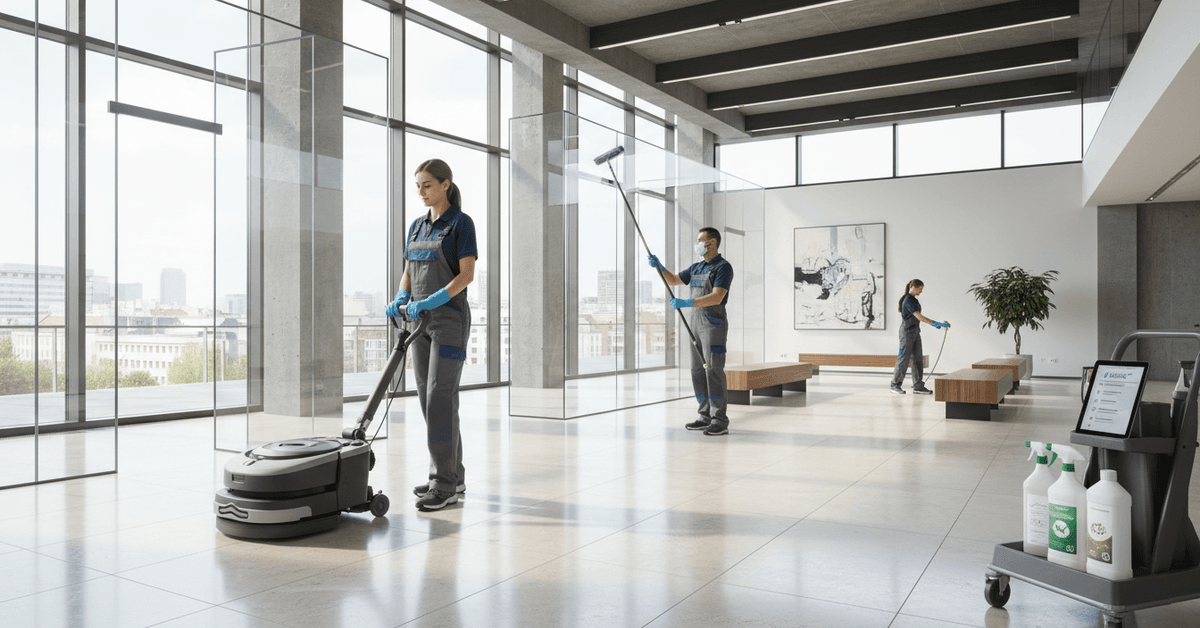
Professional Cleaning Duties: Daily, Weekly, and Periodic Tasks
Cleaning duties aren’t one-size-fits-all—they shift depending on sector, building type, and required hygiene levels. Below is a broad outline, but in practice, these tasks are often customized:
Daily Duties
- Dusting and wiping surfaces
- Disinfecting high-touch areas (door handles, switches)
- Emptying waste bins and replacing liners
- Mopping and vacuuming floors
- Restocking supplies (soap, paper towels)
Daily routines are foundational. Actually, many maintenance managers comment that when these basics slip, the building immediately “feels dirtier for days.” Slightly surprising, but common.
Weekly Duties
- Deep cleaning toilets and washbasins
- Spot-cleaning carpets and upholstered furniture
- Washing internal windows or glass
- Dusting high and hard-to-reach places
Weekly cleaning fills gaps that aren’t visible day-to-day but are essential for preventing bigger sanitation issues or unpleasant odors from building up over time.
Periodic Duties
- Carpet and floor deep-cleaning (e.g., waxing, polishing)
- External window washing
- Cleaning ventilation or HVAC systems
- Specialized disinfection services (after illness outbreak)
Sometimes, it feels like periodic cleaning gets pushed aside until an inspection is due. Maybe it’s just my observation, but many places only realize its importance after a surprise “dust cloud” during HVAC filter checks.
Staff Skills, Training, and Certification
Professional cleaning isn’t just about effort—it’s about expertise. In the Czech Republic, staff often undergo internal or third-party training focusing on safe use of chemicals, ergonomic work, and emergency response (for accidental spills or contamination).
Some companies invest in international certifications for added assurance—ISO 9001 or EN 13549 are well-known. Details about these European standards can be found on the ISO official site.
Legal and Occupational Health Requirements
Compliance is a non-negotiable part of the maintenance sector . Local laws (such as the Czech Labour Code and Public Health Protection Act) mandate several protective steps for cleaning staff and the spaces they maintain.
In practice, this means enforcing correct handling of chemicals, ensuring ventilation, and regular medical checkups for employees at risk of exposure.
Penalties for violations can be significant—not just financially, but reputationally. The Czech Ministry of Labour and Social Affairs has official guidelines for occupational safety.
Trends and Technology in Czech Cleaning Services
The professional cleaning industry is quietly embracing technology. Automated floor scrubbers and ultrasonic disinfection systems are no longer rare.
However, many smaller Czech firms still lean toward manual methods. Some argue the human touch is irreplaceable.
Others say new tech cuts costs and delivers more consistent outcomes. Reality? It’s probably a blend of both, at least for now.
Eco-Friendly Practices
There’s growing interest in green cleaning—eco-labeled chemicals and water-saving equipment. While not every client demands it, larger companies increasingly see it as part of their social responsibility. (Though admittedly, upfront costs can be a barrier.)
How Cleaning Companies Differentiate Their Services?
In a crowded field, Czech cleaning providers might stand out by:
- Offering tailored service packages for offices, schools, or retail spaces
- Establishing transparent quality checks
- Using digital reporting tools for client updates
- Providing emergency or “rapid response” options
| Provider | Certifications | Eco Options | Digital Reporting |
|---|---|---|---|
| Firm A | ISO 9001 | Yes | Yes |
| Firm B | EN 13549 | No | No |
| Firm C | Internal | Yes | No |
This table is a simple sample; real-life choices often come down to a mix of price, scope, and trust in quality assurance frameworks.
Conclusion: The Evolving Landscape of Czech Maintenance
The Czech maintenance sector stands at an interesting crossroad: balancing tried-and-true methods with new technology and eco-conscious approaches. Standards remain the backbone of trust, while flexibility and quality keep clients satisfied.
For more tips on hiring cleaning professionals or setting up maintenance routines, check the related articles below or visit industry bodies such as IFMA CZ for best practices. A consistently clean space not only looks good—it feels better and protects everyone involved.